



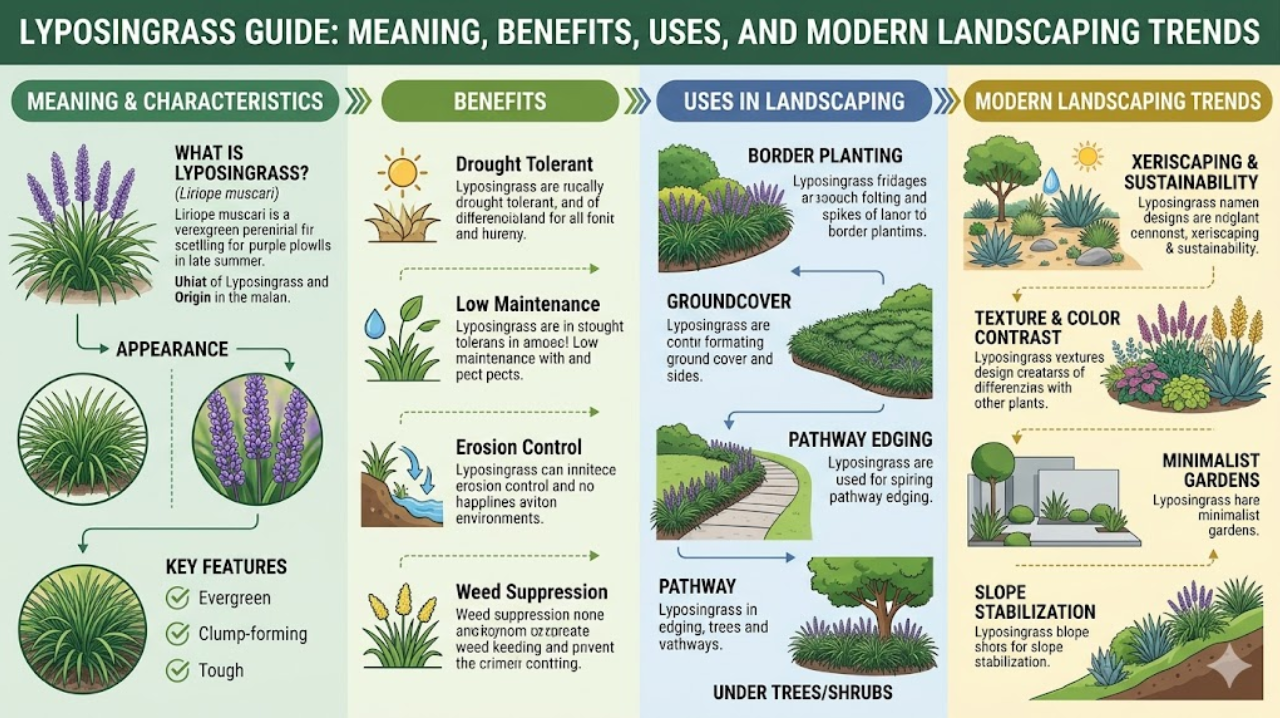
Lyposingrass is widely recognized as a modern landscaping concept that represents ornamental grass-style greenery used in outdoor design. It is often linked with natural aesthetics, soft textures, and eco-friendly garden arrangements. In many design discussions, Lyposingrass is considered a symbol of minimalistic yet visually appealing green space planning. Moreover, it is popular in both residential and commercial environments due to its clean and structured appearance. As a result, Lyposingrass has become an important part of modern sustainable landscaping ideas.
In addition, Lyposingrass is not limited to a single botanical species. Instead, it works as a broader design concept that blends natural grass textures with modern architecture. Many designers actively use Lyposingrass-inspired elements to balance hard surfaces and greenery. Therefore, outdoor spaces feel more relaxed, natural, and visually harmonious. Overall, Lyposingrass has become a well-recognized term in contemporary landscape design.
Furthermore, Lyposingrass also plays a role in digital and conceptual gardening trends. It is frequently mentioned in online gardening communities as a symbol of aesthetic green planning. As more people focus on sustainable outdoor living, the concept continues to evolve. Because of its natural look and flexible design use, Lyposingrass remains highly relevant in modern landscaping culture.
Key Characteristics of Lyposingrass
Lyposingrass is known for its soft texture and highly adaptable structure in landscaping designs. It is commonly associated with grass-like plants that maintain a consistent green appearance across seasons. One major feature is its ability to blend smoothly into different environments. Whether used in gardens, parks, or urban spaces, Lyposingrass enhances visual harmony. In addition, it creates a calm and natural outdoor atmosphere that improves overall design quality.
Another important characteristic is its low-maintenance nature. It requires minimal watering and simple care, making it ideal for modern homeowners. Therefore, Lyposingrass supports sustainable gardening by reducing water and resource usage. It also performs well in long-term landscape planning due to its durability and flexibility. As a result, it is widely used in both simple and advanced landscape designs.
Moreover, Lyposingrass is often used to soften architectural edges in outdoor environments. It creates smooth transitions between natural and built elements. Designers value it because it adds depth and texture without overwhelming the space. Consequently, Lyposingrass is widely used in minimalist, modern, and luxury landscaping styles
Benefits and Practical Uses of Lyposingrass
Lyposingrass offers multiple benefits for modern landscaping and outdoor design projects. First of all, it enhances visual appeal while remaining easy to maintain. It is frequently used in residential gardens to create peaceful and relaxing environments. Additionally, it helps improve spatial balance by adding soft greenery between hard surfaces. Therefore, outdoor areas feel more natural and welcoming.
In urban environments, Lyposingras plays an important role in improving aesthetics and reducing visual stress. It is suitable for parks, walkways, and commercial areas where low maintenance is required. Designers also use it to create structured patterns in modern landscaping layouts. Because of its flexibility, it works well in both small and large spaces. As a result, its demand continues to grow in modern design projects.
Furthermore, Lyposingrass is widely used in eco-friendly landscaping systems. It supports sustainability by requiring fewer resources than traditional plants. Many landscape architects prefer it because it combines beauty with practicality. In minimalist designs, it performs especially well due to its simple and clean appearance. Overall, Lyposingrass has become an essential element in modern outdoor planning
Care, Maintenance, and Future Trends of Lyposingrass
Lyposingrass requires minimal care, making it suitable for low-maintenance landscaping systems. It grows best in well-drained soil and needs occasional watering to maintain its appearance. Regular light trimming helps preserve its structured and clean look. Therefore, it is ideal for busy environments where maintenance time is limited. Its natural resilience also ensures long-term usability.
In addition, seasonal adjustments help maintain its appearance. During warmer months, light trimming controls growth and keeps its shape. In cooler seasons, it remains stable with very little care. Because of this flexibility, Lyposingras performs well throughout the year. As a result, it is widely used in residential and commercial landscaping projects.
Looking toward the future, Lyposingrass is strongly connected to sustainable and smart landscaping trends. As urban spaces expand, demand for low-maintenance greenery continues to rise. Therefore, Lyposingrass is expected to play a major role in future garden design. Designers increasingly see it as a key element in modern outdoor planning and eco-friendly architecture.
Environmental Benefits and Sustainability of Lyposingrass
Lyposingrass is strongly associated with environmentally friendly landscaping practices that support sustainable outdoor design. It helps reduce water consumption because it is linked with low-maintenance greenery concepts. Many modern landscapes use Lyposingrass to create eco-balanced environments that require fewer chemical inputs. This makes it suitable for green urban planning and eco-conscious garden projects. Overall, Lyposingrass contributes to a cleaner and more sustainable landscape approach.
In addition, Lyposingrass supports biodiversity-friendly environments by blending naturally with surrounding plants and materials. It helps reduce soil erosion in designed landscapes by maintaining ground stability. In urban settings, Lyposingras contributes to temperature regulation through natural cooling effects. Its sustainable nature makes it a preferred choice for future-focused landscaping designs. These benefits show why Lyposingrass is gaining attention in eco-design trends.
Key environmental benefits include:
- Reduced water consumption in landscaping
- Improved soil stability and erosion control
- Eco-friendly and low chemical usage design
- Natural temperature balancing in urban areas
- Support for biodiversity-friendly environments
Care and Maintenance Tips for Lyposingrass
Lyposingrass is widely valued for its low-maintenance nature, making it an easy choice for modern landscaping projects. It performs best in well-drained soil where moisture does not collect excessively. Regular light watering is usually enough to maintain its healthy appearance. Because Lyposingrass is linked with sustainable design, it does not require heavy fertilizers or chemical treatments. Therefore, it is a practical option for both beginners and professionals.
Proper trimming is also important for maintaining structured garden layouts. Light seasonal pruning helps preserve its shape and prevents uneven growth. Designers often keep Lyposingrass controlled to maintain a clean and modern aesthetic. In addition, removing dry or damaged parts improves its visual quality. Consistent care ensures long-lasting beauty across seasons.
Environmental conditions also affect its maintenance. It adapts well to moderate climates and tolerates mild weather changes easily. However, poor maintenance can reduce its visual quality over time. Balanced sunlight exposure helps maintain its natural green tone. With minimal effort, Lyposingras remains strong and visually appealing.
Common Mistakes and Challenges in Using Lyposingrass
One common mistake in using Lyposingrass is overwatering, which can disrupt its natural balance. Since it is linked with low-water landscaping concepts, too much moisture reduces its quality. Another issue is poor soil selection, which affects its adaptability. Many users also ignore spacing, which can lead to a crowded and uneven design. Proper planning is essential for maintaining structure and beauty.
Improper trimming is another challenge. Cutting too often or unevenly can disturb its natural flow. Some designs also fail to integrate Lyposingrass properly with surrounding elements, leading to visual imbalance. Therefore, careful design planning is necessary to highlight its beauty. Avoiding these mistakes improves long-term results.
Environmental mismatch is also a major issue. Lyposingras performs best in suitable lighting and drainage conditions. When placed incorrectly, its performance decreases. Understanding its natural requirements helps prevent design failure. When used correctly, it remains a strong landscaping element.
Design Applications and Modern Aesthetic Uses of Lyposingrass
Lyposingrass is widely used in modern landscape design to create clean and visually appealing outdoor spaces. It is commonly integrated into minimalist layouts where simplicity is important. Designers use it to soften architectural lines and improve spatial harmony. It enhances both small gardens and large commercial areas. As a result, it has become highly valuable in modern design systems.
It is also popular in digital-inspired landscaping concepts. It is used in pathways, borders, and decorative green zones to enhance depth and structure. Architects often include Lyposingrass in urban planning to improve outdoor aesthetics. Its flexibility allows it to fit many design styles without overpowering other elements. Therefore, it remains a key part of modern landscape creativity.
Main design applications include:
- Minimalist garden layouts and green spaces
- Pathways, borders, and decorative edges
- Residential backyard landscaping projects
- Commercial outdoor design projects
- Modern urban architectural integration
Future Growth and Market Trends of Lyposingrass
Lyposingrass is expected to grow in popularity as demand for sustainable landscaping increases. It is widely used in eco-friendly architecture and smart garden planning. The trend toward low-maintenance outdoor design is helping it gain recognition. Urban developers are also adopting Lyposingrass-inspired solutions for green city projects. As a result, it has strong future potential in landscaping industries.
It is also influenced by digital landscaping trends where virtual garden design is expanding. Designers and homeowners prefer adaptable greenery concepts that reduce effort and cost. The future market for Lyposingrass is expected to grow with smart design innovations. Its versatility ensures relevance in both physical and digital environments. Therefore, it continues to evolve as a modern design symbol.
Key future trends include:
- Growth in eco-friendly landscaping demand
- Increased use in smart urban garden planning
- Expansion in digital and virtual landscape design
- Rising popularity of low-maintenance greenery systems
- Integration into modern architectural projects
FAQs
What is Lyposingrass used for?
Lyposingrass is used for modern landscaping and decorative green space design.
Is Lyposingrass a real plant species?
It is mainly a design concept rather than a specific plant species.
Does Lyposingrass require high maintenance?
No, it is known for its low-maintenance nature and easy care.
Where can Lyposingrass be used?
It can be used in gardens, pathways, borders, and urban landscapes.
Why is Lyposingrass popular?
It is popular because it combines beauty, simplicity, and sustainability.
Conclusion
Lyposingrass has become an important concept in modern landscaping due to its natural look and low-maintenance characteristics. It successfully combines simplicity, sustainability, and modern design appeal. Designers and homeowners use it to enhance outdoor beauty without complex maintenance requirements. Its flexibility allows it to fit different environments and architectural styles easily.
Moreover, the growing demand for eco-friendly and sustainable landscaping continues to increase its popularity. Urban expansion and modern lifestyle needs are driving the use of simple green solutions like Lyposingrass. It supports both visual appeal and environmental balance in outdoor spaces. Therefore, it plays an important role in modern garden design.
Overall, Lyposingrass represents the future of modern landscaping by connecting nature with innovation. Its popularity is expected to grow further as sustainable living becomes more important worldwide.
