



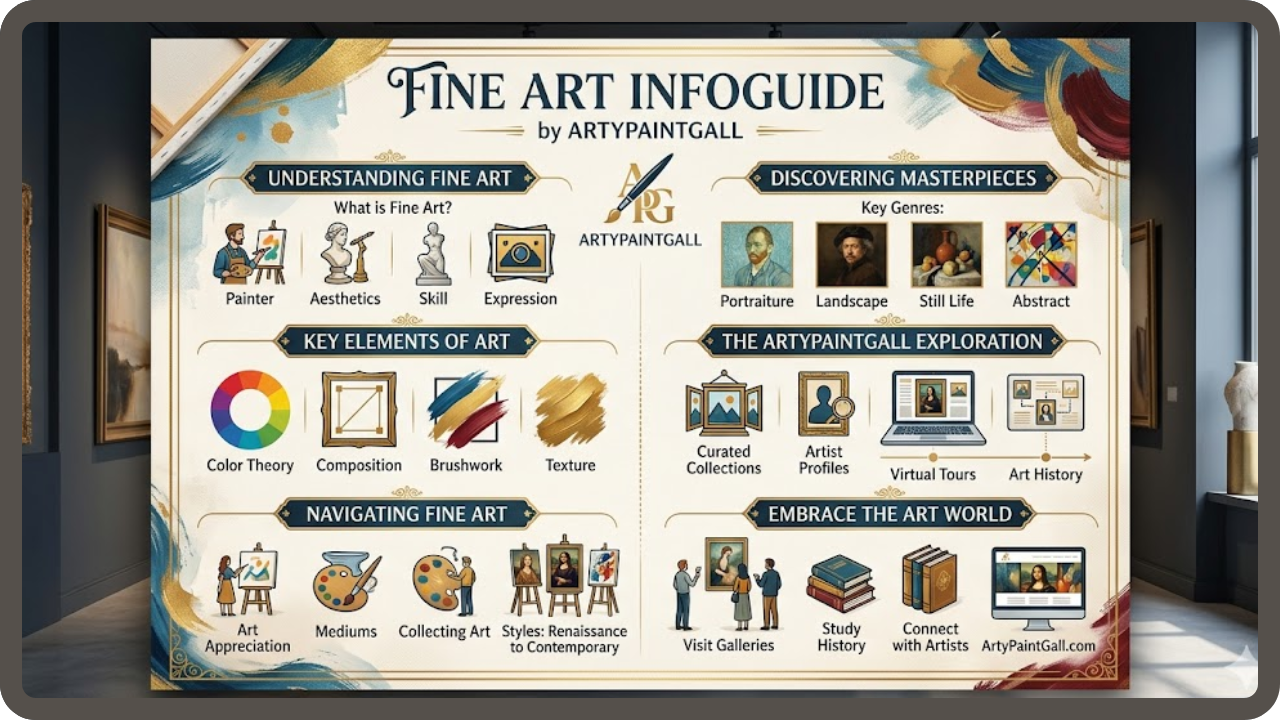
Fine art has always been a powerful way for people to express emotions, ideas, and creativity. The world of fine art infoguide artypaintgall brings together traditional techniques, modern artistic trends, and valuable learning resources for art lovers. Whether someone is a beginner painter or an experienced artist, understanding fine art helps improve creativity and artistic vision. Art galleries, painting collections, and visual storytelling continue to influence global culture and design industries. Today, digital platforms and online galleries have made fine art more accessible than ever before. This guide explores important aspects of fine art, artistic styles, painting methods, and the growing influence of modern creativity.
Understanding the Meaning of Fine Art
Fine art refers to creative works made mainly for beauty, imagination, and emotional impact rather than practical use. Paintings, sculptures, sketches, and mixed media artworks are common forms of fine art. The purpose of fine art is often to inspire thought, tell stories, or reflect cultural values through visual expression. Many artists spend years mastering color theory, composition, and creative techniques to improve their artistic abilities. In the world of fine art infoguide artypaintgall, artistic expression is celebrated as a timeless form of communication. Fine art also plays a major role in museums, galleries, interior design, and educational institutions worldwide.
Key Characteristics of Fine Art
Fine art focuses strongly on creativity, imagination, and visual storytelling. Artists use different materials and techniques to communicate emotions, ideas, and cultural experiences through their work. Every artwork reflects originality and artistic vision, making each creation unique and meaningful. Paintings, drawings, sculptures, and digital art are all considered important forms of fine art expression. The artistic process often involves patience, practice, and deep creative thinking. Through fine art infoguide artypaintgall, artists and art enthusiasts can better understand the value of artistic expression in modern society.
Popular Types of Fine Art Paintings
The fine art industry contains many painting styles that appeal to different audiences and collectors. Traditional oil paintings remain highly respected because of their rich textures and long-lasting quality. Watercolor art is admired for its soft blending and delicate appearance, while acrylic painting is popular for its fast-drying and flexible nature. Abstract art uses shapes, colors, and patterns to express emotions without realistic representation. Modern fine art trends also include digital painting and mixed media creations that combine various materials and techniques. The growth of fine art infoguide artypaintgall resources online has made learning these styles easier for new artists around the world.
Oil Painting Techniques
Oil painting is one of the oldest and most respected forms of fine art. Artists use oil-based paints to create detailed textures, smooth blending, and vibrant color effects that last for many years. This style is commonly used for portraits, landscapes, and classical artistic masterpieces. Oil paintings often require longer drying times, allowing artists to make gradual adjustments and refinements. Many famous historical artworks were created using this traditional painting method. Because of its timeless beauty, oil painting remains an essential topic within fine art infoguide artypaintgall discussions.
Abstract and Digital Art
Abstract and digital art styles have become increasingly popular in modern creative industries. Abstract art focuses more on emotion, movement, and color rather than realistic objects or scenes. Digital fine art combines artistic imagination with technology, allowing artists to create detailed artworks using software and digital tools. These modern styles attract younger audiences and expand opportunities for online art exhibitions and global sharing. Many digital artists now build professional careers through online platforms and social media galleries. The evolution of abstract and digital creativity continues shaping the future of fine art infoguide artypaintgall content worldwide.
Why Fine Art Matters in Modern Society
Fine art has a strong influence on culture, education, and emotional well-being. Art helps people communicate feelings that words sometimes cannot explain. Many educational systems use visual arts to improve creativity, concentration, and critical thinking skills among students. Businesses and interior designers also use fine art to enhance spaces and create emotional connections with audiences. Studies suggest that creative activities can reduce stress and improve mental focus in both children and adults. Because of these benefits, fine art infoguide artypaintgall continues gaining popularity among collectors, students, and professional artists.
Fine Art and Emotional Expression
Art allows individuals to express emotions, memories, and experiences through visual creativity. Different colors, shapes, and painting styles can create unique emotional responses in viewers. Many artists use their work to communicate personal stories, social issues, or cultural traditions in meaningful ways. Fine art also helps people relax, reduce anxiety, and improve mental focus through creative activities. In schools and communities, art programs encourage imagination and emotional development among students. These emotional and educational benefits make fine art infoguide artypaintgall an important resource for creative inspiration and learning.
Essential Tips for Beginner Artists
Starting a fine art journey requires patience, creativity, and continuous learning. Beginners should first understand basic drawing techniques and color combinations before moving to advanced painting styles. Practicing regularly helps improve brush control, shading, and artistic confidence. Many professional artists recommend studying famous artworks to understand composition and visual balance. Artists should also experiment with different materials to discover their preferred medium. Following guides like fine art infoguide artypaintgall can help beginners gain useful inspiration and practical learning strategies.
Building Artistic Confidence
Developing artistic confidence takes time, practice, and dedication. Beginners often improve faster when they create art consistently and learn from mistakes without fear. Trying different artistic styles can help artists discover their personal creative identity and strengths. Studying professional artworks also provides valuable insight into composition, texture, and visual storytelling. Many successful artists began their journey with simple sketches and gradual experimentation. Through regular practice and guidance from fine art infoguide artypaintgall, aspiring creators can continue improving their artistic abilities over time.
How Online Art Galleries Are Transforming Fine Art
Digital technology has completely changed the way people discover and purchase art. Online galleries now allow artists to showcase paintings to international audiences without needing physical exhibitions. Social media platforms also help creators build personal brands and attract collectors worldwide. Virtual exhibitions and digital portfolios make fine art more accessible for students and art enthusiasts. Many artists now combine traditional painting methods with digital marketing strategies to grow their visibility. The rise of fine art infoguide artypaintgall platforms demonstrates how art education and online creativity are becoming more connected.
Growth of Digital Art Communities
Digital art communities provide artists with opportunities to share ideas, gain feedback, and connect with global audiences. Online platforms encourage collaboration between creators from different countries and artistic backgrounds. Artists can now sell prints, offer commissions, and display portfolios without relying solely on traditional galleries. Social media exposure also helps emerging artists build recognition and attract potential buyers more quickly. As technology continues advancing, digital creativity and virtual art experiences are becoming more influential in the art industry. These developments continue strengthening the impact of fine art infoguide artypaintgall in modern artistic culture.
Choosing the Right Fine Art Style for Your Space
Selecting artwork for homes or offices depends on personal taste, room design, and emotional atmosphere. Abstract paintings often create modern and energetic environments, while landscape paintings provide calm and peaceful feelings. Minimalist fine art works well in contemporary interiors with clean designs and soft colors. Large statement paintings can become focal points in living rooms or offices. Art collectors often choose paintings that reflect personal identity or emotional meaning. Exploring fine art infoguide artypaintgall collections can help buyers discover styles that match their spaces perfectly.
Modern Interior Art Trends
Modern interior design trends often combine fine art with minimal furniture and balanced color schemes. Large canvas paintings and abstract artworks are commonly used to create stylish and visually appealing spaces. Neutral wall colors allow paintings to stand out and become the center of attention in a room. Many homeowners also prefer personalized artwork that reflects emotions, culture, or travel experiences. Fine art can improve the atmosphere of homes, offices, cafes, and creative workspaces. The growing popularity of artistic interior decoration keeps fine art infoguide artypaintgall highly relevant in modern design culture.
(FAQs)
Q1: Why is fine art important in modern culture?
Fine art helps people express creativity, emotions, and ideas in meaningful ways. It also preserves cultural history and inspires future generations.
Q2: Which painting style is best for beginners?
Acrylic painting is often recommended because it dries quickly and is easy to use. Beginners can practice different techniques without needing expensive materials.
Q3: Can digital art be considered real art?
Digital art is widely accepted as a modern form of artistic expression. Many professional artists now create and sell artwork using digital tools.
Q4: How can someone improve their painting skills?
Regular practice and studying professional artworks can help improve artistic abilities. Experimenting with different techniques also builds confidence and creativity.
Q5: What makes abstract art unique?
Abstract art focuses more on emotions, colors, and shapes than realistic images. Every viewer may interpret the artwork in a different way.
Q6: Are online art galleries useful for artists?
Online galleries help artists reach larger audiences around the world. They also make it easier to display, promote, and sell artwork digitally.
Q7: How does art affect emotions and mental health?
Creative activities can reduce stress and improve focus and relaxation. Many people use art as a way to express feelings and improve emotional well-being.
Final Thoughts
The world of fine art infoguide artypaintgall offers endless opportunities for creativity, learning, and artistic growth. Fine art continues evolving through modern technology, digital galleries, and global artistic communities. From classical oil paintings to innovative digital artwork, every style reflects human imagination and cultural expression. Artists and collectors alike benefit from understanding different art forms and creative techniques. As online art education and virtual galleries continue expanding, fine art will remain an important part of modern culture and personal expression. Exploring fine art not only develops creativity but also builds deeper emotional and cultural appreciation.
