



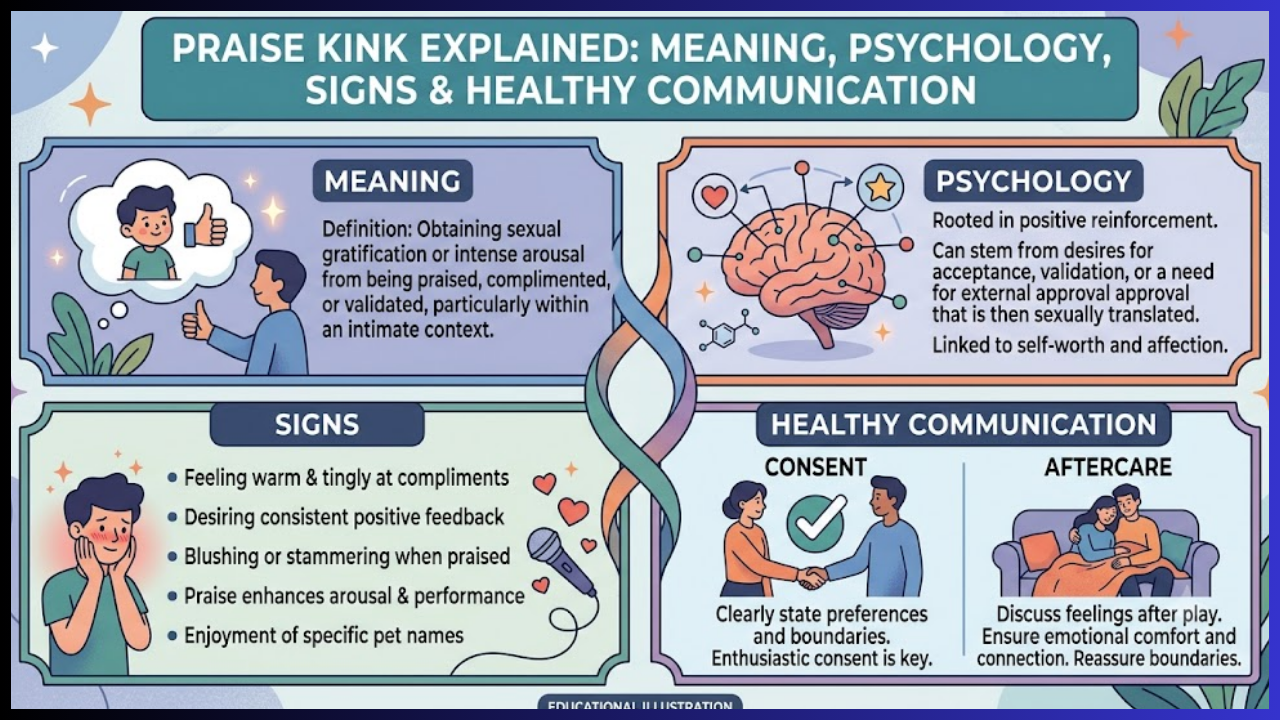
A praise kink refers to finding emotional satisfaction or sexual excitement from receiving sincere compliments, encouragement, or verbal affirmation within a consensual relationship. While many people enjoy compliments, a praise kink goes beyond everyday appreciation because positive words can become a meaningful part of emotional intimacy. It is considered one of many personal preferences that adults may have in romantic relationships. Like other relationship preferences, it varies widely from person to person and is healthiest when built on mutual respect, consent, and open communication. Understanding a praise kink can help partners communicate more effectively while strengthening trust and emotional connection.
What Is a Praise Kink?
A praise kink is a preference in which affirming words such as compliments, encouragement, or expressions of appreciation become especially meaningful during emotional or romantic interactions. People who identify with this preference often feel more connected, confident, or emotionally secure when they receive genuine positive feedback. It is important to understand that enjoying praise does not automatically mean someone has a praise kink, as most people appreciate kind words. The distinction lies in how significant praise becomes in creating intimacy and emotional fulfillment. Because every relationship is different, there is no universal definition that applies to everyone.
Praise Kink vs. Enjoying Compliments
Many people appreciate hearing that they are valued or respected, but this alone does not indicate a praise kink. A praise kink involves a stronger emotional or romantic response to verbal affirmation within a consensual context. For some individuals, encouraging language can increase feelings of trust and closeness. Others simply enjoy compliments without experiencing them as a central part of intimacy. Recognizing this difference helps avoid misunderstandings and promotes respectful conversations between partners.
Why Do Some People Have a Praise Kink?
Researchers have not identified a single cause for a praise kink because human attraction and emotional preferences develop through many different influences. Personality traits, attachment styles, communication preferences, and life experiences may all contribute to how someone responds to verbal affirmation. Some people naturally place a high value on words of encouragement, while others prefer physical affection or acts of service. None of these preferences are inherently right or wrong when practiced respectfully and consensually. Healthy communication remains the most important factor regardless of personal preferences.
Psychological Factors
Several psychological concepts may help explain why praise feels particularly meaningful to some individuals:
- Positive reinforcement strengthens rewarding experiences.
- Verbal affirmation can increase confidence and self-esteem.
- Secure emotional attachment often grows through supportive communication.
- Feeling appreciated may deepen trust between partners.
- Individual personality differences influence preferred expressions of affection.
Common Signs of a Praise Kink
Although everyone expresses affection differently, some common behaviors may suggest that verbal affirmation plays an important role in someone’s relationships. These signs should never be viewed as a diagnosis or label because personal preferences exist on a broad spectrum. Instead, they simply highlight patterns that some adults may recognize in themselves or their partners. Respecting individual boundaries is always more important than assigning labels.
Some possible signs include:
- Feeling especially happy after receiving sincere compliments.
- Appreciating encouragement during romantic conversations.
- Enjoying positive verbal feedback more than material gifts.
- Feeling emotionally connected through affirming language.
- Valuing genuine recognition and appreciation from a trusted partner.
How to Communicate About a Praise Kink
Open communication is essential for any healthy relationship. If praise is an important part of emotional or romantic connection, discussing preferences honestly can help both partners understand one another better. Conversations should focus on comfort levels, boundaries, and mutual respect rather than assumptions. Listening carefully is just as important as expressing personal needs. Consent and ongoing communication help create a positive experience for everyone involved.
Helpful Communication Tips
- Be honest about your preferences.
- Ask your partner what makes them feel appreciated.
- Use genuine rather than exaggerated compliments.
- Respect personal boundaries.
- Check in regularly about comfort and consent.
How to Explore a Praise Kink Safely
Exploring a praise kink should always begin with honest communication and mutual consent. Every relationship is different, so partners should openly discuss what kinds of verbal affirmation feel comfortable and meaningful. Setting expectations before introducing new dynamics can help prevent misunderstandings and ensure that both people feel respected. A healthy approach focuses on trust, emotional safety, and ongoing communication rather than assumptions. When practiced thoughtfully, verbal praise can strengthen emotional intimacy and relationship satisfaction.
Talk About Expectations First
Before incorporating a praise kink into your relationship, have a conversation about personal preferences and boundaries. Discuss the types of compliments or affirmations that feel genuine and supportive. This creates a shared understanding and helps both partners feel comfortable. Open communication also makes it easier to adjust if either person’s preferences change over time.
Key discussion points:
- Preferred words or phrases
- Emotional comfort levels
- Personal boundaries
- Situations where praise feels most meaningful
Keep Praise Genuine
Authenticity is one of the most important aspects of a healthy praise kink. Compliments should reflect sincere thoughts rather than feeling forced or exaggerated. Genuine affirmation builds trust and creates stronger emotional connections. Honest communication is usually more impactful than excessive or repetitive praise.
Examples of genuine affirmation:
- Appreciating someone’s kindness
- Recognizing thoughtful actions
- Acknowledging personal achievements
- Expressing gratitude sincerely
Respect Boundaries at All Times
Every individual has different comfort levels regarding verbal affirmation. Some people enjoy frequent praise, while others prefer it occasionally. Respecting boundaries means listening carefully, checking in regularly, and accepting feedback without judgment. Healthy relationships prioritize consent and mutual respect above everything else.
Boundary reminders:
- Ask for feedback regularly.
- Never pressure a partner.
- Respect changing preferences.
- Stop immediately if someone feels uncomfortable.
Check In Afterward
Communication should continue after meaningful conversations or intimate experiences. Asking how each person felt encourages honesty and strengthens trust. These check-ins allow couples to celebrate what worked well while adjusting anything that felt uncomfortable. Consistent feedback supports healthier long-term relationships.
Helpful check-in questions:
- What felt most meaningful?
- Was anything uncomfortable?
- Would you change anything next time?
- How can we communicate better?
Benefits of Positive Verbal Affirmation
Whether or not someone identifies with a praise kink, positive communication can improve many relationships. Genuine encouragement often strengthens trust, reduces misunderstandings, and creates a supportive emotional environment. Kind words can also increase confidence and reinforce healthy relationship habits. When compliments are sincere and respectful, they contribute to stronger emotional bonds. Consistent communication remains one of the foundations of lasting relationships.
Potential Benefits
- Improved emotional intimacy
- Better communication
- Increased relationship satisfaction
- Greater confidence
- Stronger mutual trust
Myths About Praise Kinks
Misconceptions can lead to unnecessary stigma. Understanding the facts encourages respectful conversations and healthier relationships. Personal preferences vary widely, and there is no single “normal” way to experience affection. The key consideration is whether everyone involved communicates openly and consents freely. Education helps replace myths with accurate information.
| Myth | Reality |
|---|---|
| Only insecure people enjoy praise. | People of all confidence levels may appreciate verbal affirmation. |
| A praise kink is uncommon. | Many adults report enjoying affirmation in different ways. |
| It always involves dominance. | Some people enjoy praise without any power dynamics. |
| It is unhealthy. | When consensual and respectful, it can be part of a healthy relationship. |
Statistics and Research
Although large-scale research focusing specifically on the praise kink is limited, broader relationship studies consistently show that positive communication contributes to healthier partnerships.
- Studies in relationship psychology have linked positive communication with higher relationship satisfaction.
- Verbal affirmation is commonly recognized as an important form of emotional support.
- Healthy communication and mutual respect remain among the strongest predictors of long-term relationship success.
Common Mistakes to Avoid With a Praise Kink
Like any relationship preference, a praise kink works best when approached respectfully and thoughtfully. Misunderstandings often occur when people assume their partner enjoys the same type of affirmation or skip important conversations about boundaries. Recognizing common mistakes can help couples create healthier and more positive experiences. Respect, honesty, and communication remain the foundation of every successful relationship.
Assuming Everyone Enjoys the Same Praise
Not everyone responds to compliments in the same way. Some people appreciate public recognition, while others prefer private encouragement. Taking time to learn your partner’s preferences creates a more supportive and meaningful experience. Personalizing compliments often has a greater emotional impact.
Remember:
- Preferences differ from person to person.
- Avoid making assumptions.
- Ask what feels meaningful.
- Adapt to your partner’s comfort level.
Overusing Compliments
Constant praise can lose its emotional impact if it becomes repetitive or insincere. Thoughtful compliments delivered at meaningful moments often feel more authentic than excessive affirmation. Quality usually matters more than quantity when building emotional intimacy.
Healthy balance includes:
- Giving sincere compliments
- Avoiding forced praise
- Recognizing meaningful moments
- Keeping communication natural
Ignoring Consent and Comfort
Consent is essential in every relationship dynamic, including a praise kink. Partners should always feel comfortable expressing what they enjoy and what they do not. Listening without judgment helps create emotional safety and strengthens trust. Respecting boundaries demonstrates care and maturity.
Consent checklist:
- Discuss boundaries openly.
- Encourage honest feedback.
- Respect personal limits.
- Revisit conversations regularly.
Treating Praise as a Solution for Every Problem
While encouragement can strengthen relationships, it cannot replace honest communication or resolve deeper conflicts. Couples should continue addressing disagreements respectfully and work together to solve challenges. Genuine praise is most effective when combined with empathy, trust, and open dialogue.
Healthy relationship habits:
- Practice active listening.
- Resolve conflicts respectfully.
- Show appreciation consistently.
- Support one another through honest communication.
FAQs
Is a praise kink normal?
Yes. Adults have many different preferences regarding affection and communication. A praise kink is considered one variation of consensual relationship preferences.
Does a praise kink always involve BDSM?
No. While some people include praise in BDSM dynamics, many simply enjoy verbal affirmation within ordinary romantic relationships.
Can someone have a praise kink without realizing it?
Yes. Some people naturally respond strongly to encouragement without identifying with any particular label.
Is communication important?
Absolutely. Honest conversations about comfort, boundaries, and expectations help create healthy and respectful relationships.
Conclusion
A praise kink is best understood as a preference for meaningful verbal affirmation within consensual adult relationships. While many people enjoy compliments, those with a stronger appreciation for encouraging words may find them especially important for emotional intimacy. The most important aspects of any relationship remain mutual respect, consent, honesty, and communication. Understanding different relationship preferences helps reduce stigma while encouraging healthier conversations. Ultimately, every relationship benefits from sincere appreciation and respectful communication.
