



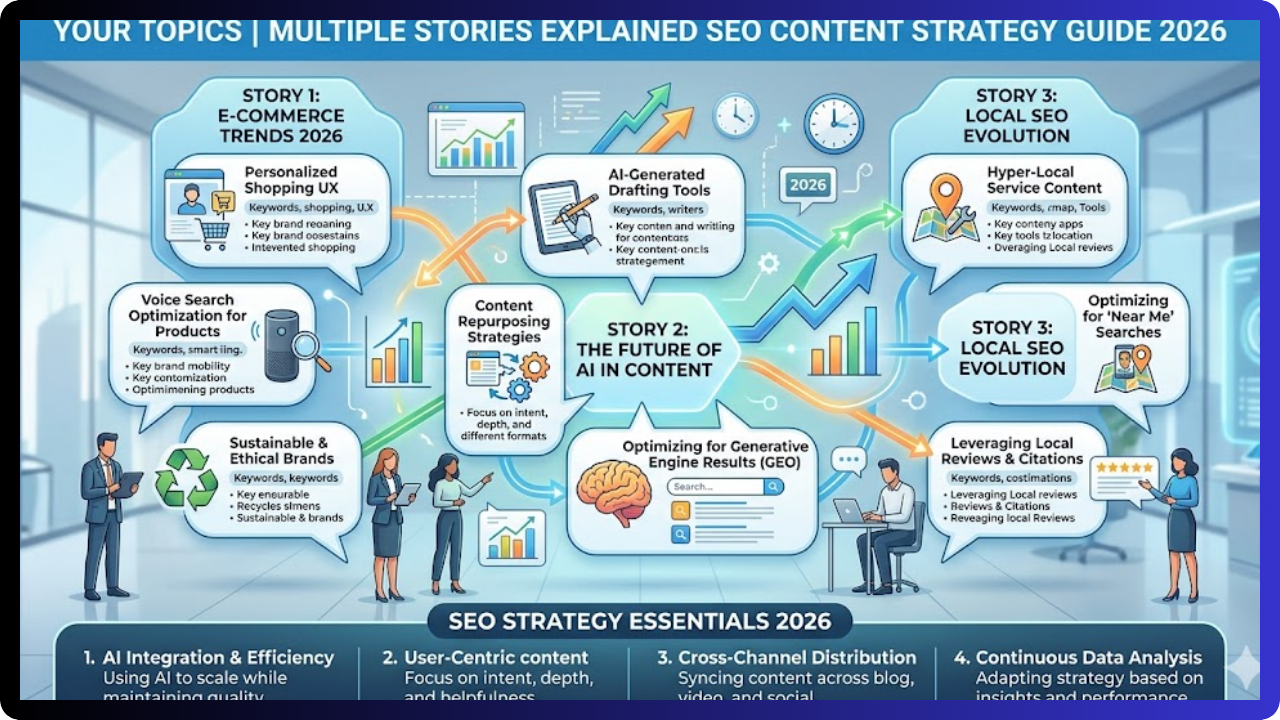
In the digital content world, your topics | multiple stories represents a powerful approach to storytelling where one central theme can generate multiple engaging narratives. This method is widely used in blogging, SEO writing, and content marketing to expand visibility and audience engagement. Instead of focusing on a single angle, creators build several storylines around one keyword or idea.
The concept of your topics | multiple stories allows writers to explore different perspectives such as technology, culture, business, or personal development within one unified theme. This not only improves content depth but also enhances search engine relevance. Modern SEO strategies increasingly rely on this multi-story approach to rank higher and attract diverse readers.
Who is This Guide For?
This guide on your topics | multiple stories is designed for content creators, bloggers, SEO specialists, marketers, and digital strategists who want to build stronger online visibility through structured storytelling. It is especially useful for beginners learning how to turn one idea into multiple engaging narratives.
Freelance writers, business owners, and social media managers can also benefit from your topics | multiple stories because it helps them create diverse content from a single theme. By applying this approach, they can improve audience engagement, keyword reach, and overall content performance across different platforms.
Why Your Topics | Multiple Stories Matters in SEO
The importance of your topic | multiple stories in SEO lies in its ability to target multiple search intents. When a single topic is expanded into several narratives, it increases keyword coverage and engagement potential. Search engines reward content that provides depth, structure, and semantic richness.
Key SEO Benefits of Multiple Stories
- Improves keyword diversity and ranking potential
- Increases user engagement time on page
- Helps target long-tail search queries
- Enhances content relevance across niches
- Strengthens topical authority in search engines
By applying your topics | multiple stories, content creators can transform a simple idea into a structured content ecosystem that performs better in organic search results.
How Your Topics | Multiple Stories Works in Content Strategy
The framework of your topic | multiple stories works by breaking a central idea into multiple sub-stories. Each story focuses on a unique angle while maintaining connection to the main topic. This allows content to remain both focused and diverse at the same time.
Example Structure of Story Expansion
A single topic like “Artificial Intelligence” can be divided into:
- AI in healthcare transformation
- AI and future job markets
- AI in creative industries
- Ethical challenges in AI development
Each of these becomes a standalone narrative while still supporting the main keyword theme of your topic | multiple stories.
Creative Applications of Your Topics | Multiple Stories
Using your topics | multiple stories in content creation opens opportunities for creativity and audience engagement. Writers, bloggers, and marketers use this approach to build stronger storytelling networks.
Popular Use Cases
- Blog content clusters
- SEO article series
- YouTube script collections
- Social media storytelling campaigns
- Brand storytelling strategies
Each application of your topic | multiple stories helps build a deeper connection between the audience and the content.
Story Development Techniques for Better Engagement
To maximize the impact of your topics | multiple stories, it is important to use structured storytelling techniques. These techniques ensure that each narrative remains engaging and informative.
Effective Techniques
- Start with a strong hook or emotional trigger
- Build conflict or challenge within the story
- Add real-world relevance or examples
- End with insight or resolution
- Maintain consistent tone across all stories
By applying these techniques, your topics| multiple stories becomes more than just content—it becomes an experience for readers.
SEO Optimization Through Your Topics | Multiple Stories
One of the strongest advantages of your topic | multiple stories is its SEO scalability. Search engines prefer content that covers multiple subtopics under one main theme.
SEO Performance Factors
- Higher content depth signals authority
- Better internal semantic linking structure
- Increased chances of ranking for multiple keywords
- Stronger contextual relevance
Using your topic | multiple stories consistently can significantly improve organic traffic growth over time.
Real-World Example of Multiple Story Strategy
A digital marketing website applying your topic | multiple stories might create content around “online business growth.” Instead of one article, it publishes:
- Startup success stories
- E-commerce scaling strategies
- Freelancer growth journeys
- Digital branding case studies
Each story supports the central keyword while targeting different audience interests. This method increases visibility and builds authority in the niche.
Common Mistakes to Avoid
While using your topic | multiple stories, many creators make mistakes that reduce effectiveness.
Mistakes Include:
- Overlapping content without clear separation
- Weak keyword placement or stuffing
- Lack of narrative flow between stories
- Ignoring user intent variations
- Repeating identical ideas across stories
Avoiding these mistakes ensures that your topics | multiple stories remains effective and SEO-friendly.
Future of Content with Your Topics | Multiple Stories
The future of digital content strongly favors multi-narrative structures. As search engines evolve, content that reflects depth, variety, and semantic relationships will perform better. The strategy behind your topic | multiple stories aligns perfectly with this evolution.
Creators who adopt this method early will benefit from stronger visibility, better audience retention, and improved authority in their niche. Over time, your topic | multiple stories will become a core framework in modern SEO storytelling strategies.
FAQs
1. What does your topics | multiple stories mean?
It means creating several different narratives or content pieces around one central topic or keyword.
2. Why is your topics | multiple stories important for SEO?
It helps improve keyword coverage, audience engagement, and search engine visibility by targeting multiple search intents.
3. How can I use your topics | multiple stories in blogging?
You can break one main idea into several subtopics and write separate articles or sections for each angle.
4. Does your topics | multiple stories improve ranking?
Yes, it improves ranking by increasing content depth, semantic relevance, and topical authority.
5. Who should use your topics | multiple stories strategy?
Bloggers, marketers, SEO writers, and content creators who want better reach and engagement should use it.
Conclusion
In conclusion, your topics | multiple stories is more than just a keyword strategy—it is a complete content development approach. By combining multiple narratives under one theme, creators can achieve better engagement, stronger SEO performance, and richer storytelling.
Whether you are a blogger, marketer, or content creator, applying your topic | multiple stories can significantly enhance your content quality and search visibility in today’s competitive digital landscape.
