



Santorini has long been one of Greece’s most recognisable destinations. Its whitewashed villages, blue-domed churches, dramatic volcanic cliffs and spectacular sunsets have attracted millions of travellers from around the world. For years, the island represented the image of a perfect Greek holiday, particularly for honeymooners, cruise passengers and luxury travellers.
However, growing attention around Santorini tourism decline has raised questions about the island’s future as a major international destination. After years of strong tourism growth, Santorini is facing a combination of challenges that are changing how visitors experience the island. Rising accommodation prices, overcrowding, pressure on infrastructure, environmental concerns and changing traveller preferences have all contributed to a more complicated tourism picture.
The situation does not necessarily mean that travellers have stopped visiting Santorini. Instead, it reflects a shift in tourism patterns and growing concerns about whether the island can continue supporting extremely high visitor numbers without damaging its environment, local communities and overall visitor experience.
Understanding this change is important for anyone planning a trip to Santorini, as well as for businesses and residents whose livelihoods depend heavily on tourism.
Who Is Santorini?

Santorini is a volcanic island in the southern Aegean Sea and part of the Cyclades island group in Greece. Its official name is Thira, although Santorini is the name most commonly used internationally.
The island was shaped by a massive volcanic eruption thousands of years ago, creating the distinctive caldera landscape that attracts visitors today. Towns such as Oia, Fira, Imerovigli and Firostefani are famous for their cliffside buildings and views across the Aegean Sea.
Tourism became central to Santorini’s economy as international travel expanded. The island developed a reputation for luxury accommodation, romantic holidays, cruise tourism, fine dining and memorable sunsets.
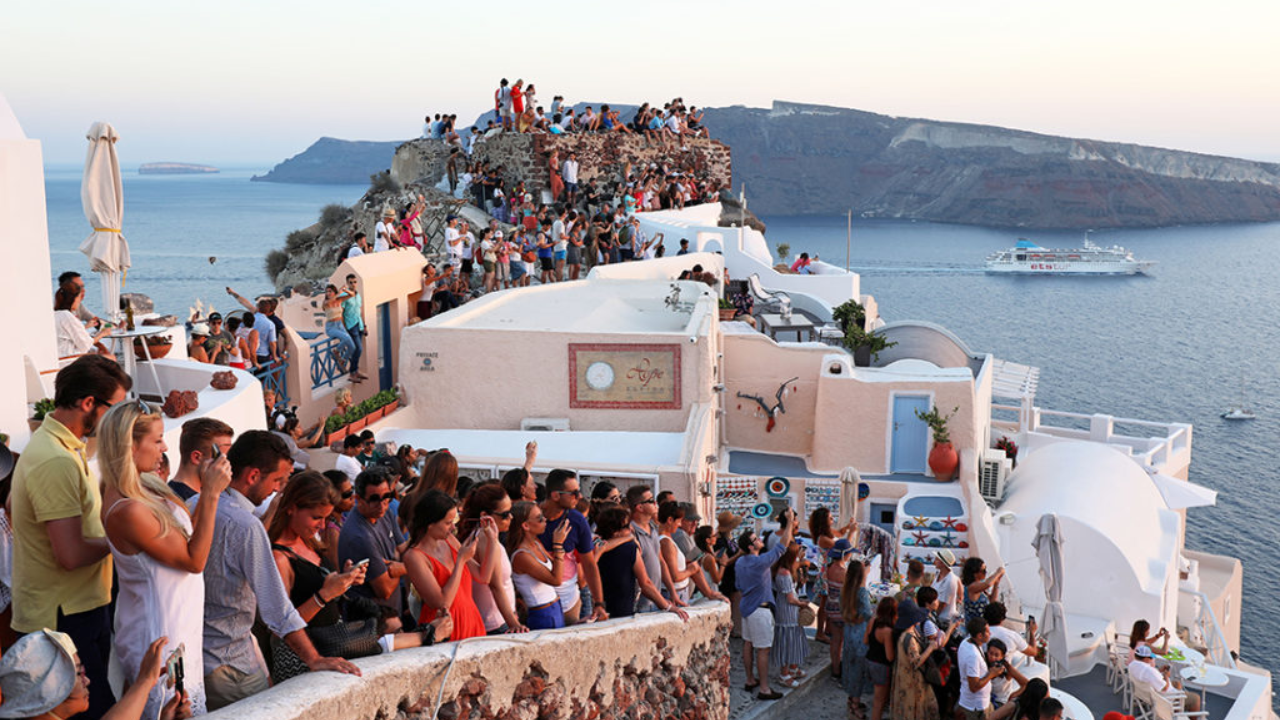
Its popularity, however, has also created challenges. During busy periods, some areas experience intense visitor concentrations, particularly around Oia and Fira. This has increased pressure on roads, water supplies, waste management, accommodation and other essential services.
What Is Behind the Santorini Tourism Decline?
The idea of a Santorini tourism decline cannot be explained by one single factor. Instead, several developments are influencing demand and the way tourists plan their holidays.
One important issue is the cost of visiting the island. Santorini has developed a strong luxury image, and accommodation, restaurants, private tours and transportation can be expensive compared with other Greek destinations. As international travellers become more price-conscious, some may choose alternatives offering similar scenery at a lower cost.
Overcrowding is another major concern. Santorini’s popularity can create a paradox: the island is attractive because it is beautiful and unique, but excessive visitor numbers can make popular locations feel congested.
Cruise tourism also plays an important role. Large numbers of passengers can arrive within a relatively short period, producing significant pressure on small areas. While cruise visitors contribute to the local economy, their concentration can make some parts of the island extremely busy.
Environmental concerns are also becoming increasingly important. Limited land, water resources and infrastructure mean that Santorini cannot expand indefinitely to accommodate rising demand.
These factors have encouraged some travellers to reconsider when, where and how they visit the island.
How Overcrowding Has Changed the Santorini Experience

Santorini’s tourism success has created an unusual problem: too many people in the places that visitors most want to see.
Oia is perhaps the clearest example. Its famous sunset attracts large crowds, particularly during the summer high season. Narrow streets and viewpoints can become extremely busy, making it difficult for visitors to enjoy the peaceful atmosphere often associated with Santorini.
Fira and other popular areas can experience similar pressure. Restaurants, roads, parking spaces and public transport may become crowded during peak periods.
This does not mean that every part of Santorini is constantly overcrowded. The experience varies according to the season, time of day and location. Travellers who explore less-visited villages, beaches and inland areas can often find a much quieter side of the island.
For this reason, the discussion surrounding Santorini tourism decline is partly about changing expectations. Some visitors are no longer looking only for famous photographs. They increasingly want authentic experiences, quieter surroundings and better value.
Economic and Environmental Impact on the Island
Tourism remains extremely important to Santorini, so any significant change in visitor behaviour can affect local businesses and residents.
Hotels, restaurants, transport companies, tour operators, shops and other businesses depend heavily on travellers. A reduction in demand during certain periods could therefore create economic pressure, especially for smaller businesses that rely on the summer season.
At the same time, unlimited tourism growth is not necessarily sustainable.
High visitor numbers can increase waste production, water consumption, traffic and demand for energy. Construction linked to tourism development can also change the appearance and character of the island.
This creates a difficult balance for local authorities and residents. Tourism provides employment and income, but excessive tourism can place pressure on the same natural and cultural assets that attract visitors.
A more sustainable tourism model could therefore be more beneficial than simply trying to increase visitor numbers every year.
That could involve encouraging longer stays, promoting travel outside the busiest months, supporting less-visited areas and improving infrastructure.
Is Santorini Still Worth Visiting?
Despite concerns about the Santorini tourism decline, the island remains a remarkable destination.
Its volcanic landscape, caldera views, traditional architecture and Aegean setting are difficult to replicate. Visitors who plan carefully can still have an excellent experience.
One of the best approaches is to avoid the busiest periods if your schedule allows. Spring and autumn can offer a different atmosphere from the peak summer months, although weather and opening times should always be considered when planning.
Travellers can also explore beyond Oia. Villages such as Pyrgos and Megalochori provide opportunities to experience a quieter side of the island. Beaches, archaeological sites, wineries and walking routes can also diversify a trip.
Another useful strategy is to plan popular activities early in the day or later in the evening, depending on the attraction. Booking accommodation and restaurants in advance can also reduce stress during busy periods.
Ultimately, Santorini is not simply a destination that is becoming unpopular. Rather, tourism on the island is entering a period in which sustainability, affordability and visitor management are becoming increasingly important.
What the Future of Santorini Tourism Could Look Like
The future of Santorini tourism will likely depend on how effectively the island manages demand.
A sustainable approach could focus less on achieving ever-higher visitor numbers and more on improving the quality of tourism. Higher-value, longer-stay visitors may provide economic benefits without creating the same short-term concentration associated with large visitor groups.
Better infrastructure will also be essential. Roads, water systems, waste management, public transportation and other services must be capable of supporting both residents and visitors.
Managing cruise tourism could be another important part of the conversation. Spreading arrivals more effectively could help reduce extreme crowding at particular times.
Technology may also play a role. Better visitor information, booking systems and real-time crowd management could help travellers discover quieter locations and reduce pressure on the island’s most famous attractions.
The concept of Santorini tourism decline may therefore evolve into something more nuanced. Rather than measuring success purely by the number of arrivals, Santorini could increasingly focus on sustainable tourism, visitor satisfaction and the long-term preservation of its unique character.
Frequently Asked Questions
Is Santorini experiencing a tourism decline?
Santorini continues to attract large numbers of visitors, but concerns about affordability, overcrowding, infrastructure and changing travel preferences have created discussion about shifts in tourism demand.
Why are fewer people interested in Santorini?
Some travellers are concerned about high prices, crowds and the impact of mass tourism. Others are choosing alternative Greek islands that may offer quieter or more affordable experiences.
Is Santorini still worth visiting?
Yes. Santorini remains a beautiful destination with unique scenery, architecture, beaches, villages and cultural attractions. Choosing the right season and exploring beyond the busiest areas can improve the experience.
When is Santorini less crowded?
The shoulder seasons of spring and autumn are generally quieter than the busiest summer period, although exact crowd levels vary from year to year.
What is Santorini doing about overtourism?
Measures and discussions around visitor management, cruise arrivals, infrastructure and sustainability are intended to reduce pressure and protect the island’s environment and local communities.
Could Santorini become less popular?
Tourism patterns can change, but Santorini’s distinctive landscape and international reputation are likely to keep it popular. The bigger question is how tourism can be managed sustainably.
Conclusion
The discussion around Santorini tourism decline reflects a broader change in the way people think about popular travel destinations. Santorini has not simply lost its appeal. Instead, the island is dealing with the consequences of becoming one of the world’s most recognisable holiday destinations.
Overcrowding, rising costs, environmental pressure and infrastructure challenges have encouraged travellers and tourism authorities to reconsider the traditional model of continuously increasing visitor numbers.
Santorini still offers extraordinary scenery, culture and experiences. However, the future of the island may depend on creating a healthier balance between tourism and everyday life.
For travellers, that means considering quieter seasons, exploring less-visited areas and travelling responsibly. For the island, it means protecting the natural beauty and local character that made Santorini famous in the first place.
If managed carefully, the next chapter of Santorini tourism does not have to be about decline. It could instead be about smarter, more sustainable and higher-quality tourism.
