



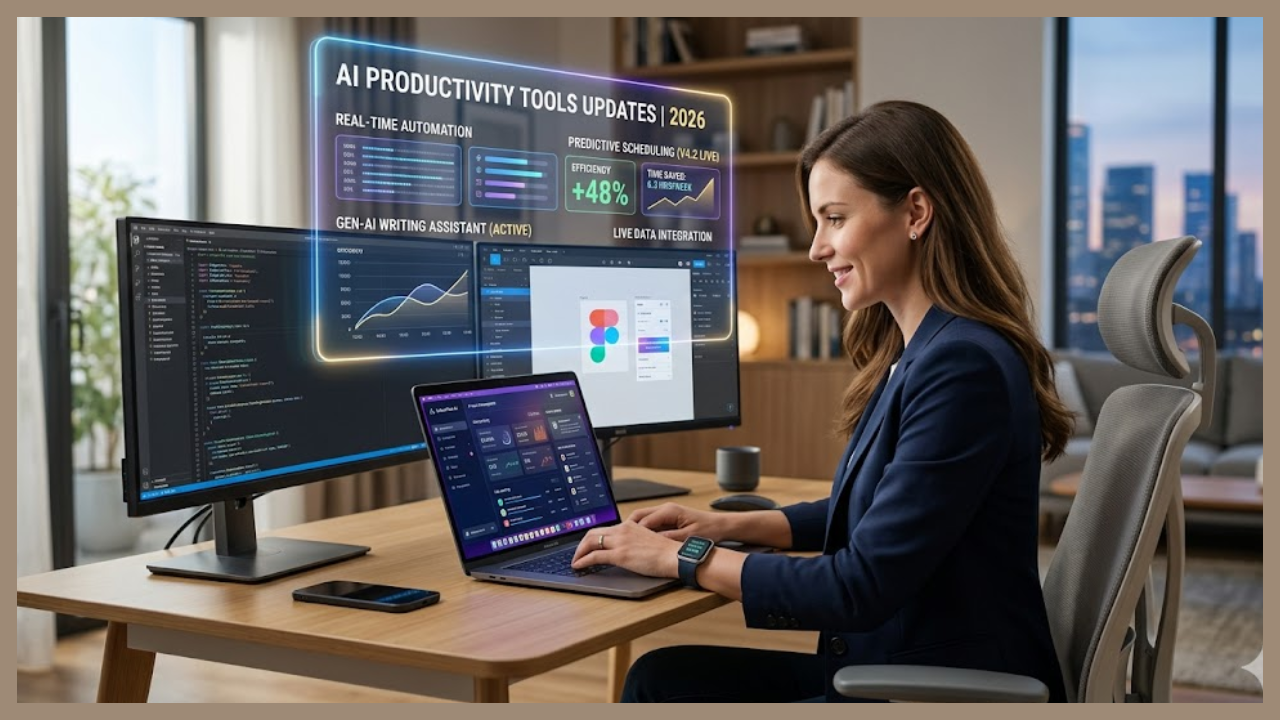
Artificial intelligence is rapidly changing the way people work, communicate, and manage daily business operations across the world. The rise of smarter automation systems, intelligent assistants, and AI-powered workspaces has made workplace productivity more advanced than ever before. Businesses are now relying on AI to handle repetitive tasks, improve workflow efficiency, and support faster decision-making processes. As organizations continue investing in automation technology, the demand for smarter productivity software keeps increasing across multiple industries. Because of these changes, the topic of ai productivity tools updates 2026 has become one of the most searched trends among companies, freelancers, startups, and remote teams looking to improve efficiency and digital performance.
Who Is Using AI Productivity Tools in 2026?
AI productivity platforms are now being used by a wide range of professionals and organizations in nearly every industry. Small businesses use AI systems to automate customer communication, scheduling, and document management while large enterprises integrate advanced AI workflows into daily operations. Remote teams are relying heavily on AI-powered collaboration platforms that improve communication, organize projects, and generate meeting summaries automatically. Content creators, marketers, developers, and business analysts are also using AI tools to reduce repetitive work and increase productivity throughout the day.
Educational institutions and healthcare organizations have also started integrating intelligent automation systems into administrative and operational workflows. Many companies believe AI productivity software helps employees focus more on creative problem-solving rather than spending hours on repetitive tasks. As the technology becomes more accessible and affordable, professionals from different sectors continue adopting AI-driven solutions to improve efficiency and reduce operational delays. This growing adoption is one of the main reasons why discussions around ai productivity tools updates 2026 continue increasing globally.
The Rise of Smarter AI Productivity Systems
The latest developments in workplace technology show that AI systems are becoming far more advanced than traditional digital assistants. One of the biggest reasons behind the popularity of ai productivity tools updates 2026 is the shift toward autonomous AI workflows that require less human involvement. Modern AI platforms can organize schedules, summarize meetings, generate documents, and even recommend business strategies based on existing company data. This level of automation helps organizations reduce repetitive manual work and improve operational speed. Many companies are now redesigning their internal processes around AI-powered productivity ecosystems because these tools help employees focus more on creative and strategic tasks instead of routine administration.
Another major development involves multimodal AI technology that allows users to interact with productivity software using voice, text, spreadsheets, images, and documents simultaneously. This creates a smoother workflow experience and improves communication across departments. Teams can upload reports, meeting recordings, or project files and instantly receive summaries, action plans, and insights. The increasing demand for intelligent collaboration systems has also encouraged software companies to introduce deeper AI integrations into business platforms. As a result, AI-driven workspaces are becoming essential components of modern digital operations.
How AI Workspaces Are Transforming Collaboration
Businesses are increasingly moving toward AI-native workspaces where collaboration tools, project management systems, and automation platforms operate together in a single environment. This transformation is one of the most important aspects of ai productivity tools updates 2026 because it changes how employees manage daily responsibilities. AI workspaces can automatically organize projects, assign priorities, generate reports, and provide contextual recommendations based on team activity. These systems improve communication efficiency while reducing the amount of time employees spend switching between multiple software applications.
Modern AI collaboration platforms are also helping remote and hybrid teams work more effectively. Intelligent meeting assistants can create summaries, extract action points, and track deadlines without requiring manual input. AI-powered search systems make it easier for employees to locate important files and company information instantly. Many organizations are now using predictive AI tools that analyze workflow patterns and identify potential delays before they become serious problems. This proactive approach allows businesses to improve productivity while reducing operational bottlenecks.
AI Agents Are Becoming Digital Employees
One of the most exciting developments connected to ai productivity tools updates 2026 is the rise of AI agents that can complete tasks independently. Unlike standard chatbots, these AI systems can perform multi-step operations, interact with software applications, analyze data, and execute workflows with minimal supervision. Companies are already experimenting with AI agents that manage scheduling, customer communication, administrative tasks, and project coordination throughout the day. These systems are designed to function more like digital coworkers than simple automation tools.
AI agents are especially valuable for businesses handling large amounts of repetitive work because they can operate continuously without fatigue. Many enterprises are using AI-driven workflow systems to improve efficiency in customer support, finance, research, and software development. Technology experts believe AI agents will become standard across most industries within the next few years as businesses continue searching for smarter ways to increase productivity. This growing trend highlights how AI is evolving from a supporting technology into an active operational partner.
The Growing Importance of AI Automation
Automation remains one of the biggest drivers behind the expansion of AI productivity platforms. Companies adopting AI-powered automation systems are discovering new ways to streamline internal processes and reduce manual workloads. Many organizations are integrating AI into email management, scheduling systems, reporting tools, and communication platforms to save time and improve workflow consistency. These automation capabilities are helping employees complete tasks faster while reducing errors caused by repetitive manual work.
Another important factor behind the success of AI automation is scalability. Businesses can now manage larger workloads without significantly increasing operational costs because AI systems handle many time-consuming processes automatically. AI-driven productivity platforms also improve data organization and decision-making by analyzing large volumes of information quickly. As workplace demands continue increasing, organizations are investing heavily in automation technologies that improve speed, accuracy, and operational efficiency across departments.
Challenges Businesses Still Face With AI Productivity
Despite the impressive growth of AI workplace technologies, businesses still face several important challenges when implementing these systems. One major concern involves data privacy and security because AI platforms often process sensitive business information. Companies must ensure that their AI systems comply with internal policies and protect confidential data from potential risks. Another common issue involves accuracy, as AI-generated outputs sometimes contain errors or misleading information that require human review before final use.
Employee adaptation is another challenge affecting AI adoption across organizations. Some teams struggle to adjust to AI-driven workflows because they require changes in work habits and operational processes. Businesses also face difficulties managing multiple AI tools simultaneously, which can create fragmented workflows instead of improving productivity. To solve these problems, many organizations are focusing on better AI governance, employee training, and workflow integration strategies that support long-term efficiency improvements.
The Future of AI Productivity Tools
The future of workplace technology will likely revolve around highly personalized AI ecosystems capable of handling increasingly complex business operations. Experts believe AI systems will soon predict workflow disruptions, optimize schedules automatically, and provide strategic recommendations before problems occur. Smaller and more efficient AI models are also expected to become integrated directly into workplace devices and enterprise software platforms. These developments will allow businesses to access advanced AI functionality without relying entirely on external cloud systems.
Another important trend shaping the future of AI productivity is the growing focus on proactive collaboration between humans and AI systems. Instead of acting only as assistants, AI tools will become active participants in decision-making, planning, and workflow management. Businesses that adopt these technologies early may gain a competitive advantage through faster operations, improved efficiency, and stronger organizational scalability. As innovation continues accelerating, AI productivity platforms are expected to become a permanent foundation of modern digital workplaces.
AI Productivity Tools for Remote Work Environments
Remote work continues to grow across global industries, and AI productivity systems are playing a major role in supporting distributed teams. Companies are using AI-powered collaboration software to improve communication, automate task tracking, and simplify project coordination between employees working from different locations. Intelligent scheduling tools can automatically organize meetings based on team availability while AI-generated summaries help employees stay updated without attending every discussion. These systems are reducing workflow confusion and helping organizations maintain productivity in remote and hybrid work environments.
AI-powered virtual assistants are also helping remote workers manage daily responsibilities more efficiently. Many professionals now rely on AI tools to organize emails, prioritize assignments, and monitor deadlines automatically. Businesses are increasingly integrating AI communication systems into their digital workplaces because they improve response times and reduce unnecessary manual processes. As remote work continues evolving, AI productivity platforms are expected to become even more important for maintaining smooth collaboration and operational consistency.
How AI Is Improving Time Management
Time management has become one of the biggest workplace challenges in modern business environments, especially for teams handling multiple digital tasks simultaneously. One of the most valuable aspects of ai productivity tools updates 2026 is the ability of AI systems to improve scheduling, planning, and workload organization. Intelligent productivity assistants can analyze work patterns, recommend optimized schedules, and automatically prioritize urgent tasks based on deadlines and productivity goals. This helps employees reduce distractions and focus more effectively on important responsibilities.
AI-driven calendar systems are also helping businesses reduce scheduling conflicts and meeting overload. Some platforms can automatically identify the best times for collaboration while protecting employee focus hours for deep work. These tools improve workplace efficiency by minimizing repetitive planning activities that consume valuable time every day. As AI technology becomes more advanced, companies are expected to rely heavily on intelligent scheduling systems that support faster decision-making and stronger workflow management.
The Role of AI in Future Business Growth
Artificial intelligence is becoming one of the most influential technologies shaping the future of business growth and workplace innovation. Companies investing in AI productivity platforms are gaining advantages through faster operations, better workflow automation, and improved decision-making capabilities. Businesses are using AI to analyze data, monitor performance trends, and identify opportunities for operational improvement in real time. This allows organizations to adapt quickly to market changes while improving productivity across departments.
The future of AI-driven business growth will likely involve deeper integration between automation systems, collaboration platforms, and intelligent analytics tools. Organizations are increasingly viewing AI not only as a productivity solution but also as a long-term strategic investment for scalability and digital transformation. As industries continue embracing automation and intelligent workplace systems, businesses that successfully adopt advanced AI technologies may achieve stronger efficiency, innovation, and competitive performance in the evolving global economy.
{FAQs}
Q:1 What are AI productivity tools in 2026?
AI productivity tools are advanced software systems that automate workplace tasks, improve collaboration, and help businesses work more efficiently. These tools use artificial intelligence to manage workflows, generate reports, and organize projects.
Q:2 Why are AI productivity tools becoming popular?
Businesses are adopting AI tools because they reduce repetitive work and improve operational speed. Many companies also use them to support remote teams and increase overall productivity.
Q:3 Which industries use AI productivity software the most?
Technology, marketing, finance, healthcare, education, and customer service industries are among the biggest users of AI productivity systems. These sectors rely on automation to improve efficiency and workflow management.
Q:4 Can AI productivity tools replace employees?
Most AI tools are designed to assist employees rather than replace them completely. They mainly handle repetitive tasks so workers can focus on creative and strategic responsibilities.
Q:5 Are AI productivity platforms secure for businesses?
Most modern AI systems include advanced security features and data protection tools. However, businesses still need proper governance policies to protect sensitive information.
Q:6 What is the future of AI workplace automation?
Experts believe future AI systems will become more autonomous and capable of handling complex workflows independently. Businesses are expected to rely even more on AI-driven decision-making tools.
Q:7 How do AI productivity tools help remote teams?
AI platforms improve communication, automate meeting summaries, organize projects, and simplify collaboration for remote workers. These features help teams stay connected and productive from different locations.
Conclusion
Artificial intelligence is continuing to transform the modern workplace through smarter automation, intelligent collaboration systems, and advanced workflow management tools. The growing importance of ai productivity tools updates 2026 shows how businesses are increasingly relying on AI to improve productivity and operational efficiency. From AI-powered workspaces to autonomous digital agents, these technologies are helping organizations save time and reduce repetitive tasks across industries. As innovation continues accelerating, AI productivity platforms are expected to become even more advanced, personalized, and integrated into daily business operations. Companies that adapt early to these evolving technologies will likely gain stronger efficiency, scalability, and long-term competitive advantages in the future digital economy.
