



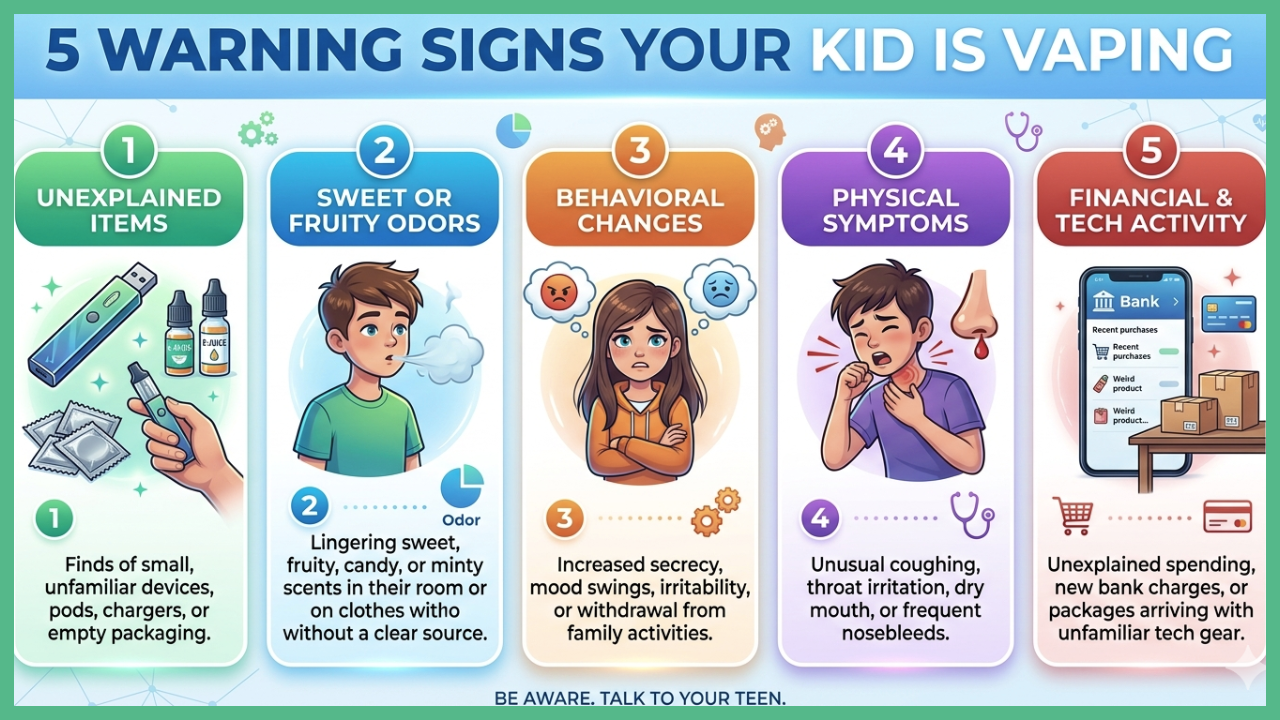
Understanding the 5 signs your kid is vaping can help you act early and protect your child’s health before the habit becomes serious. Vaping has become increasingly popular among teenagers, often marketed as a safer alternative to smoking, but it still carries significant risks. Many devices are small, sleek, and easy to hide, making it difficult for parents to detect early use. Teenagers may also avoid discussing it openly, which adds another layer of challenge. When you know what to look for, you can identify subtle changes that might otherwise go unnoticed and respond calmly.
Who Is Most at Risk of Vaping
Teenagers and young adolescents are the most vulnerable group when it comes to vaping trends. Curiosity, peer influence, and exposure to social media often play a major role in encouraging first-time use. Many teens believe vaping is less harmful than traditional smoking, which lowers their guard and increases experimentation. Students facing stress, anxiety, or academic pressure may also turn to vaping as a coping mechanism. In some cases, even well-informed children may try it due to social acceptance among friends, which increases the need for parental awareness.
Why Parents Must Recognize Vaping Early
Teen vaping is not just a passing trend but a growing concern supported by global health data. Many young users begin out of curiosity or social pressure, without fully understanding the long-term consequences. Nicotine can quickly affect the developing brain, leading to dependence and reduced concentration. Parents often miss early warning signals because they resemble normal teenage mood changes or lifestyle shifts. Recognizing patterns early allows you to step in before the behavior becomes deeply rooted and harder to manage.
The Hidden Nature of Modern Vaping Devices
Modern vaping devices are designed to blend into everyday life, which makes them harder for parents to detect. Many of these devices resemble common items such as USB drives, pens, or small tech accessories that do not raise suspicion. Teenagers often keep them in school bags, pockets, or even plain sight without drawing attention. This hidden design contributes to the growing challenge parents face when trying to identify usage. Understanding these details strengthens your ability to notice the 5 signs your kid is vaping early.
The 5 Signs Your Kid Is Vaping
One of the most noticeable indicators is a sweet or fruity scent that lingers on clothes, in bedrooms, or around personal belongings. Unlike cigarette smoke, these smells are often pleasant, which can make them easier to ignore if you are not aware of their significance. Physical symptoms can also appear, such as increased thirst, dry mouth, or occasional nosebleeds. Behavioral changes may follow, including irritability, secrecy, or a sudden desire for privacy beyond normal teenage behavior. You might also come across unfamiliar gadgets that resemble USB drives or pens, which are commonly used as vaping devices. In some cases, there may also be a noticeable decline in academic focus or motivation, forming the 5 signs your kid is vaping that should not be ignored.
Emotional and Psychological Effects on Teens
Vaping does not only affect physical health but also impacts emotional and mental well-being. Nicotine can influence mood patterns, leading to anxiety, restlessness, or irritability over time. Teenagers may struggle with concentration or feel dependent on vaping to manage stress. These emotional shifts can affect relationships with family and friends, creating distance or communication gaps. Parents may notice these changes but not immediately connect them to vaping habits, which makes awareness even more important.
Additional Warning Patterns Parents Should Notice
Beyond the main indicators, there are subtle patterns that can reinforce your concerns. A teenager who is vaping may become defensive when asked simple questions or may change their social circle without clear explanation. Spending habits might shift, with small amounts of money disappearing more frequently. Physical complaints such as headaches, fatigue, or a persistent cough can also appear without an obvious cause. Observing consistent patterns rather than isolated events helps build a clearer understanding of the situation.
Building Trust Through Open Communication
When dealing with sensitive issues like vaping, communication plays a crucial role in finding a solution. Teenagers are more likely to respond positively when they feel heard rather than judged or blamed. Creating a safe space for conversation encourages honesty and reduces secrecy. Instead of reacting with anger, parents can guide discussions toward understanding and support. This approach helps build long-term trust and makes it easier to address concerns effectively, especially when noticing the 5 signs your kid is vaping.
What You Should Do If You Notice These Signs
If you begin to recognize the 5 signs your kid is vaping, your response plays a critical role in the outcome. It is important to approach the situation with calmness rather than confrontation, as strong reactions can push your child to become more secretive. Starting a respectful and open conversation encourages honesty and helps you understand their perspective. Sharing factual information about the risks is more effective than using fear or punishment. Early and thoughtful action increases the chances of preventing long-term habits.
Supporting Data and Real-World Context
Research indicates that a significant number of teenagers experiment with vaping before reaching adulthood, which increases the risk of addiction at an early age. Flavored products remain one of the main reasons young users are drawn to vaping, as they mask the harshness typically associated with nicotine. Studies also suggest that nicotine exposure during adolescence can impact brain development, particularly in areas related to attention and memory. These insights highlight the importance of identifying the 5 signs your kid is vaping as early as possible.
(FAQs)
1. How can I tell if my child is vaping at home?
Look for smells, behavior changes, and hidden devices in personal spaces.
2. Is vaping more dangerous than smoking for teens?
Both are harmful, but vaping still exposes teens to addictive nicotine and chemicals.
3. Why do teenagers start vaping?
Peer pressure, curiosity, and flavored products often influence their decision.
4. Can vaping affect my child’s brain?
Yes, nicotine can impact memory, focus, and brain development in teens.
5. What should I say if I suspect vaping?
Stay calm, ask questions, and create a safe space for honest discussion.
6. Are vape devices easy to hide?
Yes, many look like USB drives or pens, making them hard to detect.
7. Can teens quit vaping easily?
Quitting can be difficult due to nicotine addiction, but early support helps.
Final Thoughts
Recognizing the 5 signs your kid is vaping is essential for protecting your child’s present and future well-being. Parents who stay aware of behavioral, physical, and emotional changes are better prepared to respond early and effectively. Vaping is not just a harmless trend, and its long-term impact can shape habits that last into adulthood. By maintaining open communication, showing understanding, and offering guidance, you create a supportive environment for your child. Small observations can lead to meaningful action, and early intervention can prevent deeper problems. Staying informed and involved is the strongest step you can take.
